
DuraFlex Chimney Sweep in Everett: A Homeowner’s Guide
DuraFlex is a flexible stainless steel liner, and its corrugated walls trap creosote differently than the smooth clay tile most Everett homes were built with. That single mechanical difference is why a sweep who cleans every flue the same way can leave deposits behind in a DuraFlex system. A proper cleaning starts with matching the brush profile to the liner, not reaching for whatever is already on the van.
This guide covers what DuraFlex is, why it turns up so often in Everett’s older housing stock, and how to maintain a relined chimney so the liner does its job for as long as it should. If you’d rather not sort through brush types and warranty language, call (888) 545-1163 and we’ll take a look.
What Is a DuraFlex Liner, and Why Does It Show Up in So Many Everett Chimneys?
A DuraFlex liner is a flexible, corrugated stainless steel flue liner that gets pulled down an existing chimney to form a new, sealed exhaust path. In Everett, it’s a common retrofit because a lot of the city’s craftsman and mid-century homes were built with clay flue tiles that have since cracked, spalled, or separated at the joints. Repouring or rebuilding a clay flue is a major masonry job. Dropping a flexible liner inside the old chase is usually faster, and it gives the chimney a continuous, gas-tight interior.
The corrugation is the trade-off homeowners should understand. A flexible liner has to bend, so its walls are ridged rather than smooth. Those ridges create more surface area and more places for creosote to condense and cling. A rigid smooth-bore liner or an undamaged clay tile flue sheds deposits more readily. That doesn’t make DuraFlex a bad choice; it makes it a liner that rewards correct cleaning.
Brand matters here. DuraFlex is one of the recognized liner systems we install, alongside Olympia Chimney and other professional-grade products. Off-brand flexible liners are sold online with thin walls and unclear testing, and matching a brush to a liner you can’t identify is guesswork. We name the brands we use because the materials behind a repair matter as much as the labor.
Corrugated vs. Smooth: Why Your Sweep’s Brush Choice Actually Matters
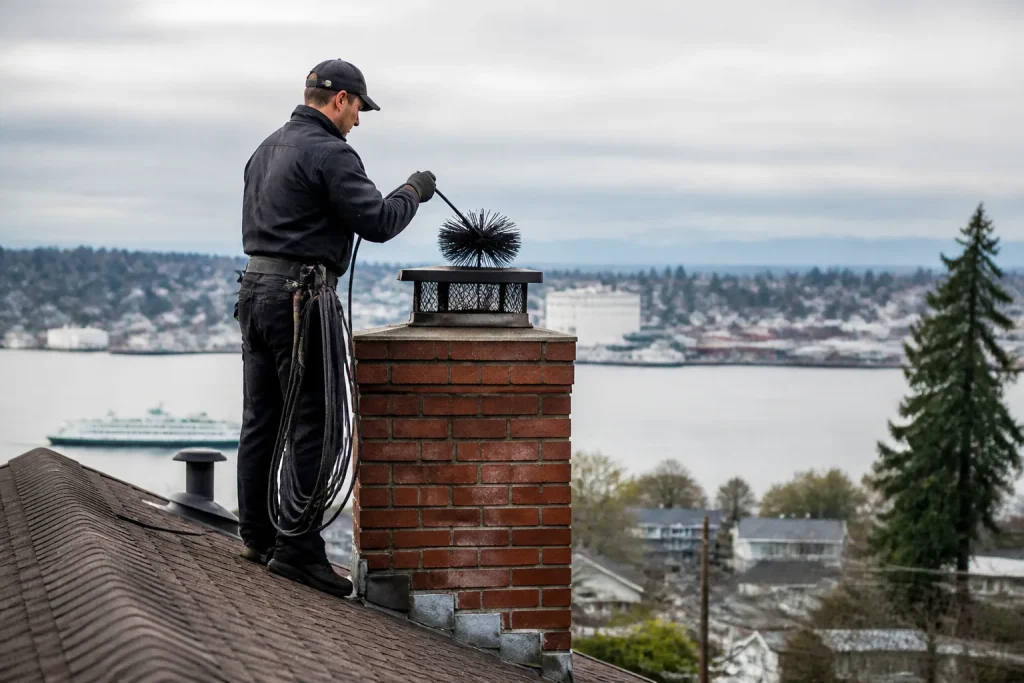
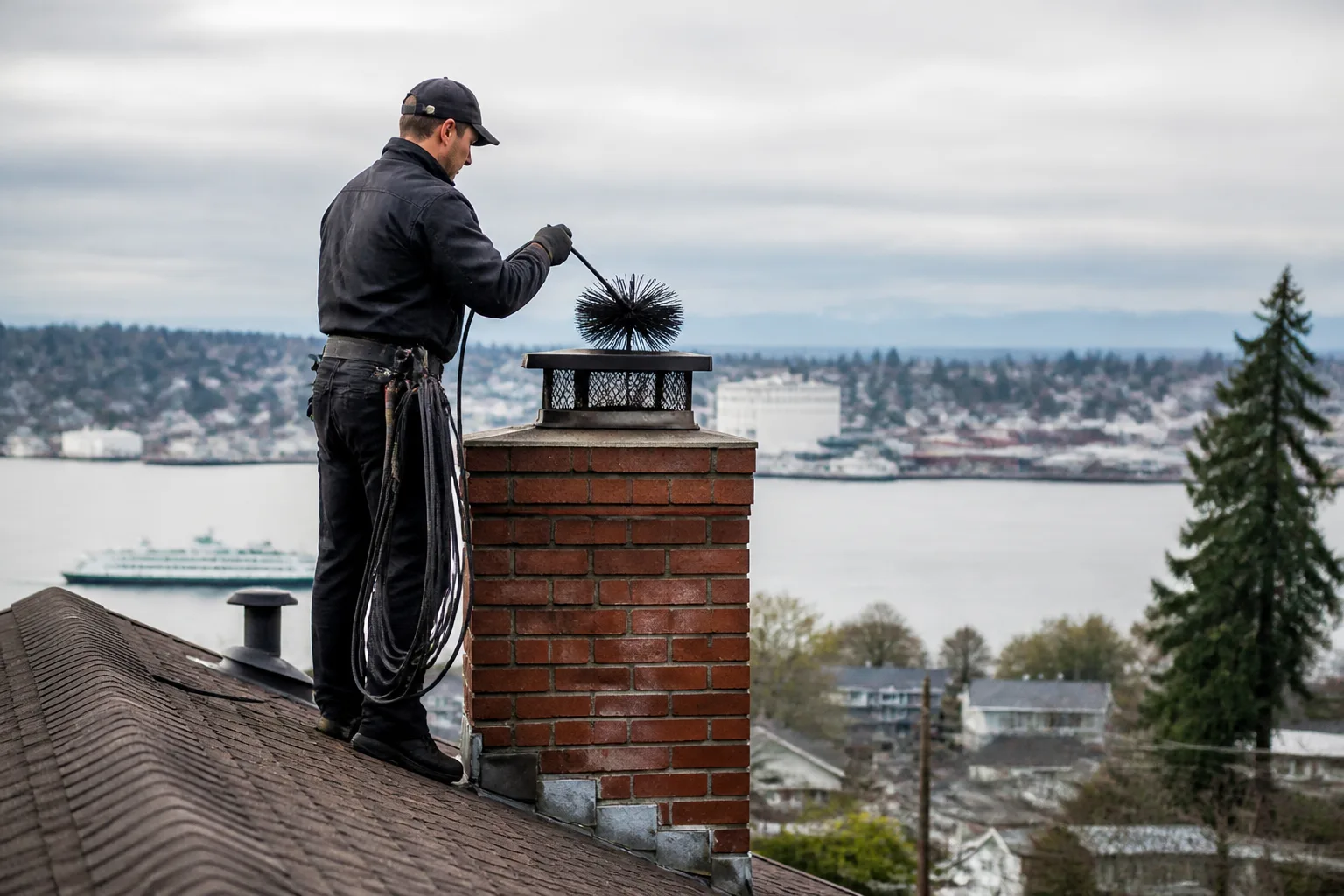
Corrugated liner needs a poly brush sized to the actual inside diameter of the flue, and it needs a sweep who checks that diameter rather than eyeballing it. Here’s why the details matter:
- Brush material. Poly brushes are the default for stainless flexible liner. Wire brushes are aggressive enough that they can scratch the stainless surface and, on a thin-walled liner, work at seams and connections. If a sweep reaches for wire on a corrugated liner without a reason, ask why.
- Brush diameter. An oversized brush jams in the corrugation and puts stress on the liner’s joints and its connection at the top plate. An undersized brush rides over the ridges and misses the troughs where creosote sits. The right size contacts the full wall without forcing.
- Corrugation depth. Deeper corrugation holds more. A standard pass that cleans a smooth flue acceptably can leave a film in the valleys of a flexible liner, and that film is what re-ignites.
- Rod technique. Flexible liner rewards a controlled, steady stroke. Spinning a brush at speed in a corrugated flue is how connections get loosened.
None of this is exotic. It’s just the difference between a sweep who adjusts for the liner in front of them and one who runs the same routine in every chimney in Everett. In our experience, that adjustment is where most cleaning quality is won or lost.
Why Improper Cleaning Can Void Your DuraFlex Warranty
DuraFlex liner warranties generally require that the liner be maintained and inspected on a regular schedule, and that any cleaning be done without damaging the liner. Scratch a stainless surface with the wrong brush, distort a seam, or knock a connection loose, and you’ve created the exact condition a manufacturer can point to when a claim comes in.
What that means practically:
- Keep a record of cleanings and inspections. A dated inspection report is your evidence that the liner was maintained.
- Use a sweep who documents what they found, including the liner’s condition before and after cleaning.
- Don’t let anyone run a wire brush or an oversize brush through a flexible liner without explaining why it’s necessary.
- Address small issues early. A loose collar or a damaged cap is cheap to fix and expensive to argue about later.
We can’t speak for every warranty, so read yours. The pattern across manufacturers is consistent, though: documented maintenance protects your coverage. A chimney sweep in Everett who hands you a written record is giving you something worth keeping.
What a Proper Post-Cleaning DuraFlex Inspection Looks Like
A real inspection after cleaning goes beyond “the flue looks clear.” On a DuraFlex system, we’re checking the liner as a whole assembly, because the failure points are at the ends and the joints, not usually in the middle of a straight run.
- The top connection and top plate. The liner has to be secured and sealed where it terminates. A gap here lets water and draft problems in.
- Collar seal integrity at the appliance or insert. This is where flue gases escape if the seal has degraded. It’s also the first place to look when a homeowner reports an odor after cleaning.
- Cap fit. A cap that’s loose, cracked, or the wrong size lets water onto the liner and invites rust at the seams. Gelco and Famco products come into play here for weatherproofing and exterior protection.
- Visible seam condition. Corrugation seams are where corrosion starts. We look for pitting, discoloration, and separation.
- Draft performance. A liner that’s clean but drafting poorly suggests a blockage, a sizing issue, or a cap problem rather than a cleaning problem.
Camera inspection is part of this. Photos of what we find are yours to keep, and they’re the difference between “you need a new liner” and evidence you can actually evaluate.
When a DuraFlex Liner Needs Replacement, Not Another Cleaning
Cleaning solves creosote. It doesn’t solve a liner that’s failing structurally, and continuing to sweep a compromised liner just delays the inevitable. The red flags are specific:
- Corrosion at the seams. Pitting or flaking along the corrugation, especially near the top or the appliance connection, means the stainless is breaking down.
- Flue gas odor after cleaning. If you still smell combustion gases once the flue is clean, the liner isn’t containing them. That’s a venting problem, not a dirt problem.
- Visible distortion or crushing. A liner that’s been dented, pinched, or deformed during a previous cleaning or installation has lost its integrity at that point.
- Loose or separated connections. A collar that won’t stay sealed is a carbon monoxide concern, not a maintenance annoyance.
- Water intrusion and rust. Rust streaks or moisture inside the liner usually mean the cap or top seal has been failing for a while.
If any of those show up, replacement is the honest answer. We’d rather tell you that than sell you a cleaning that buys a season. HeatShield is one of the products we can use for certain liner and flue restoration situations, and DuraFlex is our flexible relining option when the existing liner has to come out of service.
When to Call a Pro
If your DuraFlex liner hasn’t been cleaned and inspected on a regular schedule, if you’re burning wood steadily through the heating season, or if you’ve noticed an odor, a draft problem, or water around the cap, it’s time. Creosote buildup and a failing liner both get worse quietly. Cleaning and inspection are the cheap end of chimney work; relining and restoration are not. Call (888) 545-1163 and we’ll book a sweep.
Related services in Everett: if the inspection turns up damage, we handle chimney repair as well as the cleaning, so you’re not coordinating two contractors for one chimney.
The Bottom Line
DuraFlex is a solid relining solution for Everett’s older clay-tile chimneys, and its corrugated walls need a brush profile matched to them. Poly brush, correct diameter, controlled technique. Skip any of those and you’re either leaving creosote behind or risking the liner and its warranty. A post-cleaning inspection that covers the top connection, the collar seal, the cap, and the seams is what protects both your chimney and your coverage. Corrosion at the seams or a lingering gas odor means replacement, not another sweep.
Chimney work is a safety trade. We treat it like one, and we’re honest when a repair can wait. If you’re in Everett and need help, Chimney Sweep Everett offers free estimates. Call (888) 545-1163. We answer 24/7. Fast dispatch from 7am to 7pm, Sunday through Friday.
Frequently Asked Questions
No. DuraFlex needs a poly brush sized to the liner’s actual inside diameter. Clay tile accepts a stiffer approach; stainless flexible liner does not, and wire brushes or oversize brushes can damage the surface and the connections.
Annual cleaning and inspection is the baseline for a wood-burning system, and it lines up with most manufacturer maintenance requirements. If you burn frequently or notice a smell or draft problem, don’t wait for the year to roll around.
It can. Warranties typically require regular maintenance and cleaning that doesn’t damage the liner, so a documented inspection history is what supports a claim. Read your specific warranty and keep your records.
Corrosion at the seams, flue gas odor after a cleaning, visible distortion, loose connections, or rust from water intrusion all point to replacement. A camera inspection shows you the evidence directly. Call (888) 545-1163 for an exact quote; estimates are free.
Written by the team at Chimney Sweep Everett.
Need Chimney Cleaning Help?
Call Chimney Sweep Everett - licensed & insured, with free written estimates in Everett.
(888) 545-1163